IT support on subscription: what it gives a business
If a company has 10–50 employees, IT tasks come up all the time: a printer breaks, the internet goes down, a workstation needs to be set up, or backups need to be checked. Below we explain how IT support on subscription works and how it differs from an in-house administrator.
What IT support on subscription is
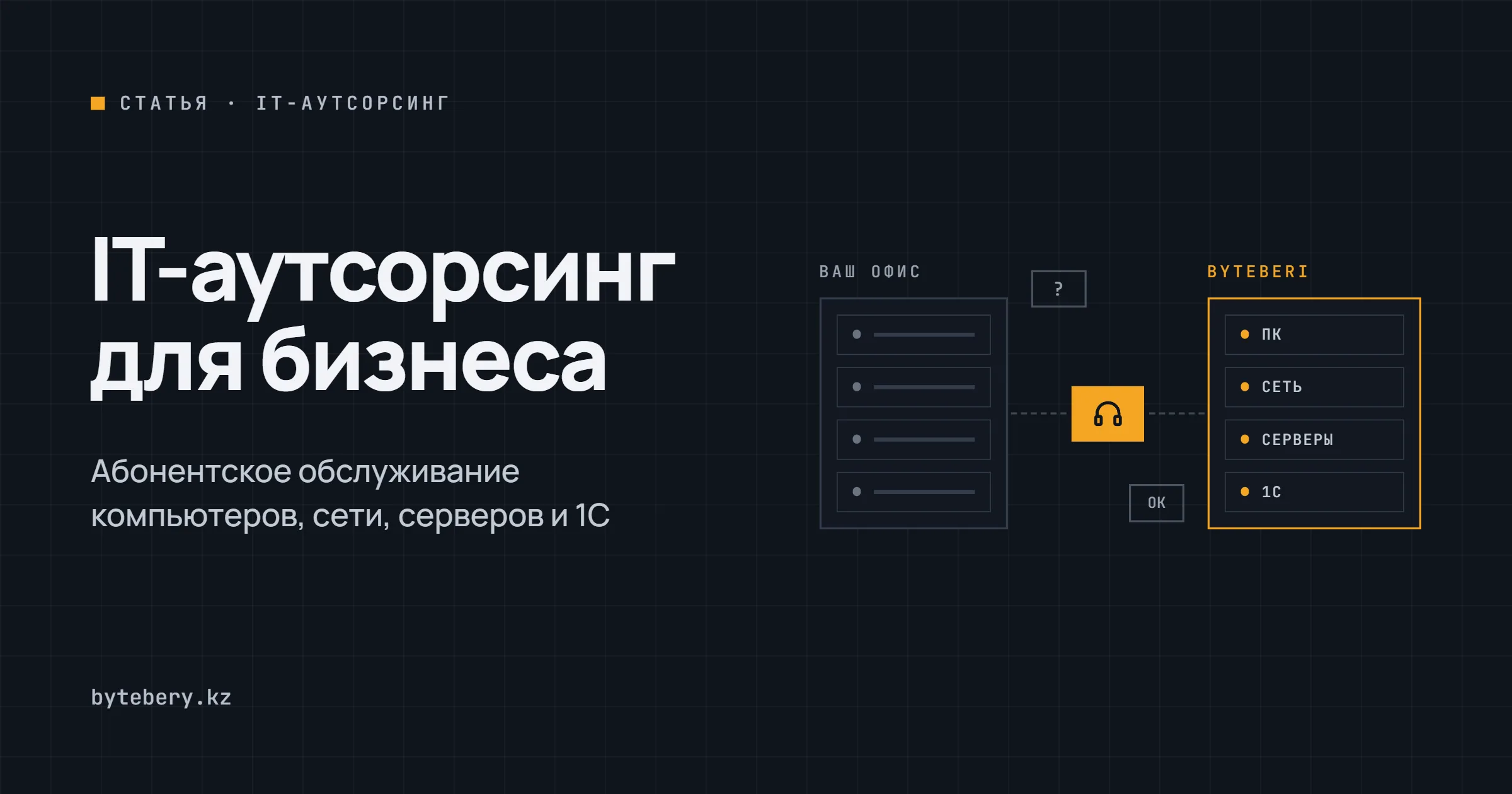
It is a monthly contract under which a contractor takes responsibility for computers, the network, servers and equipment. Typically this includes workstations and office equipment, networks and Wi‑Fi, server administration, backups, remote assistance and on-site visits, and accounting for equipment and licenses.
This format suits offices, accounting firms and trading companies with up to 50 people.
In-house administrator vs. subscription support: a comparison
We compare them across three criteria that managers care about most often.
Cost
An in-house employee costs more than their salary: taxes, workstation, vacation and sick leave are added on top. Under a contract, you pay a fixed amount, which covers an agreed scope of work.
The specific amounts depend on the number of workstations and tasks and are determined after an audit. Compare the total cost of ownership, not just the salary.
Skills
A single specialist is usually a generalist. For a small network, this is enough. But when servers, security, backups and 1C are needed, different skills are required, and here a team is stronger.
There is also the risk of the "one-man orchestra": all knowledge about the infrastructure sits with one employee. If that person leaves, the company is left without passwords, diagrams and an understanding of how everything works.
Response time
When an administrator is on vacation or sick, requests go unanswered. A team has someone to pick up the task, and remote assistance allows many issues to be resolved without a site visit.
Response times and the procedure for submitting requests should be written into the contract. Do not rely on verbal promises.
Other advantages of the subscription model
- a predictable IT budget;
- transparent accounting of equipment and licenses;
- documented infrastructure;
- backups and updates according to a set procedure;
- scaling as the team grows.
When an in-house specialist is still needed
An in-house employee is justified for a large infrastructure, specialized equipment or constant development work. A hybrid scheme is also possible: an in-house specialist handles day-to-day issues, while an external team is brought in for complex tasks.
What to look for in the contract
- list of services and scope of work;
- procedure for submitting requests;
- response times;
- backup procedure;
- access and documentation: who owns them and how they are transferred;
- responsibilities of the parties;
- termination conditions.
How to start moving to IT support on subscription
The process is simple: request, audit, contract (scope, timelines, cost), then work and ongoing support. Prepare in advance a list of equipment, user accounts, a list of programs and current problems. This will make the audit go faster.
Conclusion
The subscription model suits companies that need predictable expenses and a broad set of skills without their own IT department. If you want to find out whether this format suits you, ByteBeri will carry out an audit and propose terms. More about the service: IT support on subscription.